How to Choose the Right Art Class for Your Child: A Parent’s Guide
Every child has a different way of discovering the world. Some love drawing imaginary characters, some enjoy dancing to music, while others are curious about instruments, colours, crafts or making things with their hands.

For parents, finding the right arts class can be a little confusing. Should you choose drawing or painting? Is a structured syllabus important? Should your child attend classes online or in person? And how can you tell whether a class is helping your child grow?
The good news is that choosing an arts class does not have to be complicated. The best starting point is to understand your child's interests, find a supportive learning environment and give them enough room to explore.
1. Start with your child's interests
Before searching for classes, observe what your child naturally enjoys doing.
Do they spend time sketching? Do they enjoy making things with paper and clay? Are they always singing, moving to music or asking how an instrument works?
These interests can help you identify a suitable starting point.
- Drawing and painting: For children who enjoy colours, shapes, characters and visual storytelling.
- Craft and creative activities: For children who like building, cutting, folding, modelling and experimenting with materials.
- Music: For children interested in rhythm, singing, listening or learning an instrument.
- Dance: For children who enjoy movement, expression, music and learning choreography.
Your child does not need to have a clearly defined talent before joining a class. An interest is enough to begin exploring.
2. Look for a teacher who encourages creativity
A good arts teacher does more than demonstrate a technique. They help students understand what they are doing, practise new skills and gradually develop their own ideas.
When evaluating a class, consider whether the teacher:
- Explains techniques in a way children can understand.
- Encourages questions and experimentation.
- Gives constructive feedback without embarrassing students.
- Recognises that children learn at different speeds.
- Allows room for individual expression instead of expecting every student to produce identical work.
A child who feels comfortable asking questions is more likely to engage with the learning process.
3. Check whether the class has a clear learning structure
Creative freedom is important, but it can work especially well when supported by a thoughtful learning plan.
For example, a drawing programme might introduce basic lines and shapes before moving towards proportions, observation, shading and composition. A music class might gradually build familiarity with rhythm, technique and practice.
When enquiring about an arts class, ask:
- What will my child learn during the first few sessions?
- How does the programme progress as skills improve?
- Is the content suitable for my child's age and experience?
- How will the teacher explain areas that need improvement?
- Will we receive feedback about progress?
A syllabus should provide direction without making creativity feel like a rigid checklist. You can also read our related article, Why Do We Need a Great Syllabus for Arts?
4. Choose the right level for your child
Not every child needs the same starting point.
A beginner may benefit from learning foundational skills at a comfortable pace. A child who already draws regularly or has previous music lessons may need more challenging exercises.
Before enrolling, explain your child's experience to the teacher. If possible, ask how the class accommodates different skill levels.
Avoid choosing a class solely because it is labelled advanced or beginner. What matters is whether the learning experience fits your child's current abilities and offers an appropriate next step.
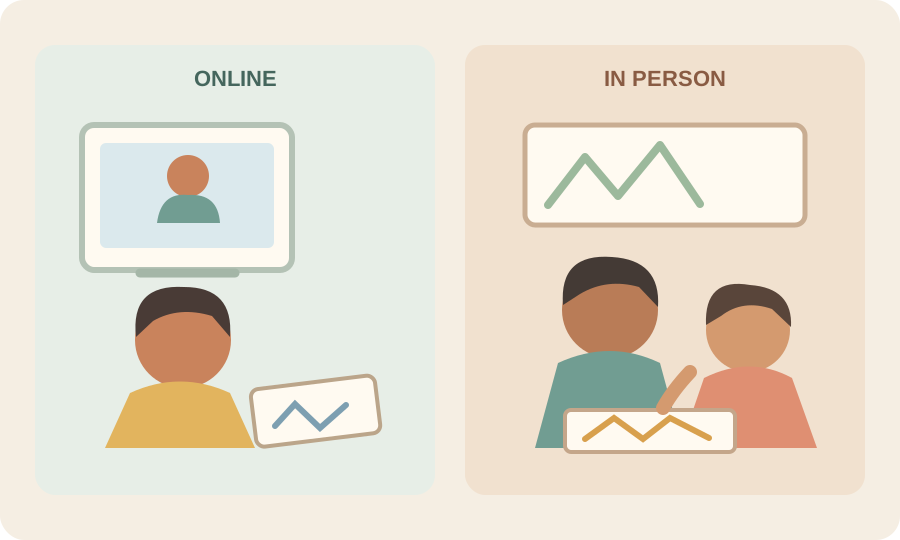
5. Compare online and in-person classes
Both formats can be useful, depending on the activity, the child's preferences and the available support.
Online classes can reduce travel and make it easier to connect with a suitable teacher from another location. They may work well for activities where demonstrations, conversation and feedback can happen effectively through a screen.
In-person classes can provide direct demonstrations, access to shared materials and face-to-face interaction with teachers and other learners.
For either format, check the class size, session duration, teacher interaction, materials required and how feedback is provided.
For younger children, also consider whether an adult will need to help with setting up materials or accessing the online session.
The right choice is the one that makes regular participation practical and enjoyable for your family.
6. Ask about progress, not just finished artwork
A beautiful drawing or a successful performance can be exciting, but the final result does not tell the whole story.
Notice whether your child is becoming more willing to try unfamiliar techniques, practising independently, asking questions or explaining their creative decisions.
You can also ask the teacher how progress is observed and communicated.
In visual arts, keeping a collection of work from different stages can help families see how ideas and techniques change over time. In music and dance, recordings or practice notes—where appropriate and with suitable permission—can help document learning.
Progress will not always be linear. Some sessions may produce a result your child loves; others may involve mistakes, repetition or discovering that a technique needs more practice. Those experiences are part of learning.
7. Consider the practical details
A class can be excellent in principle but difficult to sustain if it does not fit your family's routine.
Before enrolling, confirm:
- Class timings and frequency.
- Fees and payment terms.
- Travel requirements or online access.
- Materials or instruments your child will need.
- Policies for missed sessions and make-up classes.
- How to contact the teacher if you have questions.
Choose a schedule that leaves your child enough time for school, rest, play and other interests. Consistency matters, but arts education should fit into a healthy routine rather than become another source of pressure.
8. Give your child time to settle in
Some children feel comfortable immediately. Others need time to become familiar with a new teacher, classmates, materials or learning format.
After a session, ask open-ended questions such as:
- What was the most interesting thing you tried today?
- Was there anything you found difficult?
- What would you like to learn next?
These questions can reveal more than simply asking whether the class was good or bad.
If your child is hesitant, explore the reason before making a decision. They may need more time, a different activity, a different teaching approach or a clearer understanding of what to expect. At the same time, take persistent discomfort or concerns about the learning environment seriously.
9. Let creativity develop without unnecessary pressure
Parents naturally want their children to learn and improve. However, an arts class does not have to lead to competitions, professional training or a career to be worthwhile.
A child can enjoy drawing without becoming a professional artist. Learning music or dance can remain a meaningful personal interest. Another child may discover a deeper commitment over time.
Allow your child to enjoy the process while gradually building skills. Celebrate effort, curiosity, practice and willingness to try again—not only polished results.
The goal is to help children discover what they enjoy and give them opportunities to develop it.
Questions parents often ask
At what age should a child start art classes?
There is no single age that suits every child or every activity. Consider your child's interest, attention span, readiness to participate and the teacher's experience with that age group. Ask the provider which classes are appropriate for your child's stage of development.
Does my child need to be talented before joining?
No. Beginners can join arts classes to explore an interest and learn foundational skills. A child's current ability should help determine the starting level, not whether they deserve an opportunity to learn.
How can I tell if an art class is good?
Look for clear instruction, a supportive teacher, age-appropriate activities, opportunities to practise and constructive feedback. Ask how learning progresses and how the teacher communicates with parents.
Should I choose group lessons or individual lessons?
That depends on the activity and your child's needs. Group classes can provide opportunities to learn alongside others, while individual lessons can allow more focused attention. Ask about the teaching format, interaction and learning goals before deciding.
How do I know whether my child is improving?
Look beyond individual finished pieces. Notice changes in technique, confidence, persistence, observation and the ability to explain creative choices. Ask the teacher for specific feedback rather than relying on comparisons with other children.
Find a starting point for your child's creative journey
Choosing an arts class is an opportunity to help your child explore an interest, learn new skills and discover their own way of expressing ideas.
Start with what excites them. Look for a teacher who supports their learning, ask practical questions and give them time to grow.
Looking specifically for drawing lessons? Read our guide to drawing classes for kids, including online and in-person options.
Looking for arts-learning opportunities? Visit AVES School of Arts to learn more about the school's arts-learning journey and request suitable batch options.
Interested in dance? Read our guide to choosing dance classes for kids.
Every creative journey starts somewhere. The important thing is to give your child the opportunity to begin.
Considering music lessons? Read our guide to choosing beginner guitar classes for kids, including what to check before choosing online or in-person lessons.